Pillows
-
Your head, and therefore respiratory system and lungs, have more direct contact with pillows than any other article in your home. This will dictate in part the quality of the air you breathe, and chemicals/toxins that you are potentially subject to over prolonged periods - and for this reason, it’s a great area to prioritize a cleaner option. In fact, when we advise on how to transition a home towards a more Non-Toxic indoor environment, our main starting areas are pillows, bedding, mattresses and sofas - basically, where you spend the majority of your time at home.
Conventional pillows are high potential sources for chemical exposure, due to the baseline materials used and processing/finishing treatments. On the synthetic side - polyurethane foam is a common pillow fill, either in block form or shredded, with all the problems this presents - potential exposure to flame-retardant treatments, formaldehyde and other VOCs of concern, along with carcinogenic and other reprotoxic/endocrine disrupting chemicals. Polyester is typically the pillow encasement fabric, and often part of the fill itself - which can bring additional exposure to formaldehyde, PFAS, phthalates, microplastics, etc. On the natural side - unfortunately natural textiles (cotton/wool/etc) that are conventionally grown and processed can carry just as high a chemical load as their synthetic counterparts - see our materials page for more information. So what are the safer options? Generally speaking, natural textiles and fills that are cleanly (organically) grown and processed will be the best options. This includes cotton and wool for pillow encasements, and fills of natural latex, kapok, wool, and buckwheat, amongst others.
Prioritize Natural textiles and fill materials - including GOTS certified (or organically grown & equally adherent, processing-wise) Cotton, Wool & Linen, GOLS Certified Dunlop Latex, C2C Gold Talalay Latex, Kapok (wild or harvested, but generally grows well without biocides or other treatments, and requires little for processing), and Buckwheat (quite the singular sleeping experience, but some love it).
Avoid Synthetic textiles and fill materials - including Polyester textiles and fibers (including blown polyester/down-alternative fill), and Polyurethane foam (this includes all flexible PU foam, including CertiPUR foam (see our certifications section for notes on this dubious certification) and memory foam (which typically has the highest chemical load of any PU foam due to the sheer number of additives required in its manufacturing)). We would also recommend avoiding down/feathers in pillows - as they typically require polyester ticking on the inside of the pillow encasement to keep the feathers from poking out, and due to the potential for harboring dust mites/allergens, and subsequent potential for microbial growth.
Avocado
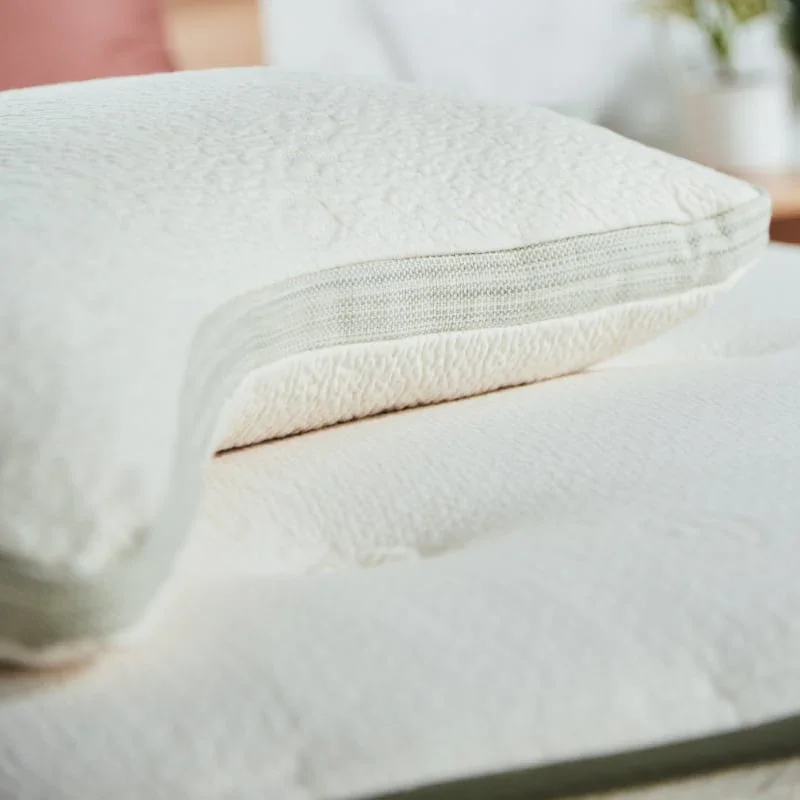
Avocado offers a number of pillow options for all kinds of sleepers, with various materials and accompanying certifications (or lack), and the corresponding absence or inclusion of potential chemical load. Our top pick is the Avocado Green Pillow - recommended for all sleeper types and filled with shredded GOLS Certified Dunlop Latex and GOTS Certified Kapok (we rarely see this cert for Kapok, as Kapok is generally grown without biocides and is easily processed without harsh chemicals) and wrapped in a GOTS Certified Cotton pillow cover. We would also recommend the Avocado Molded Latex Pillow as a good option, which is made with GOLS Certified Dunlop Latex infused with charcoal (the final product is not designated as GOLS certified because it falls under the 95% organic content requirement with the charcoal infusion). The Molded Latex option recently went through a slight re-design, reducing its profile to make it better for side sleepers. Both pillows carry additional OEKO-Tex, MADE SAFE and Greenguard Gold certifications - though as Greenguard Gold measures VOC emissions, not really applicable to pillows made from natural materials - as there shouldn’t be any toxic VOCs to speak of (unlike with petrochemical based materials).
OVERALL SCORE
Best
CERTIFICATIONS
Circadian
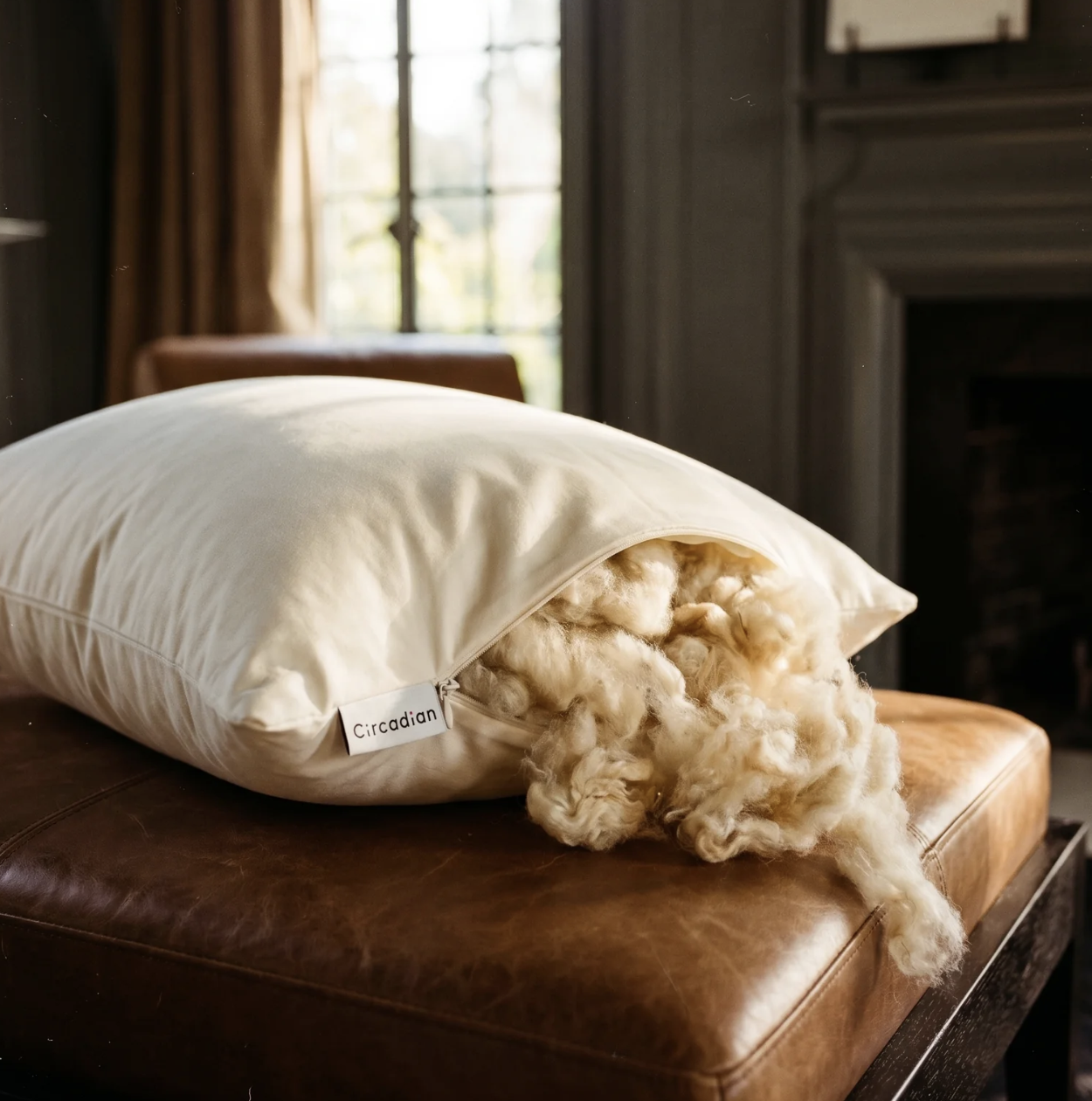
A newer entrant into the market, Circadian started with a familiar - and generally speaking, great way to elevate a category - route, namely that there weren’t any pillows the founder was seeing that ticked all the boxes he required. What they’ve done is fantastic - creating six different pillow options that cover the full spectrum of sleepers and bodies. And we do mean full spectrum - on the website there is a navigation tab that helps browse by need, including MCS-Safe! They also have an indication for which pillow works best for CPAP users…this company takes its mission seriously, and we are seriously grateful. Wild-Harvested Kapok fill is the top pick for MCS sufferers, along with their GOTS certified cotton and buckwheat fills. Kapok is incredibly comfortable but, as it’s a plant-based fiber, will compress down and require frequent enough fluffing. Their GOTS certified wool is another great option, though may have a slight odor which should dissipate in the first week or two - which may or may not be tolerated by the heightened chemically sensitive. (In our experience of being chemically sensitive and using wool pillows, we have not noticed any odor or effect - but to each body their own!)
OVERALL SCORE
Best
CERTIFICATIONS
Savvy Rest
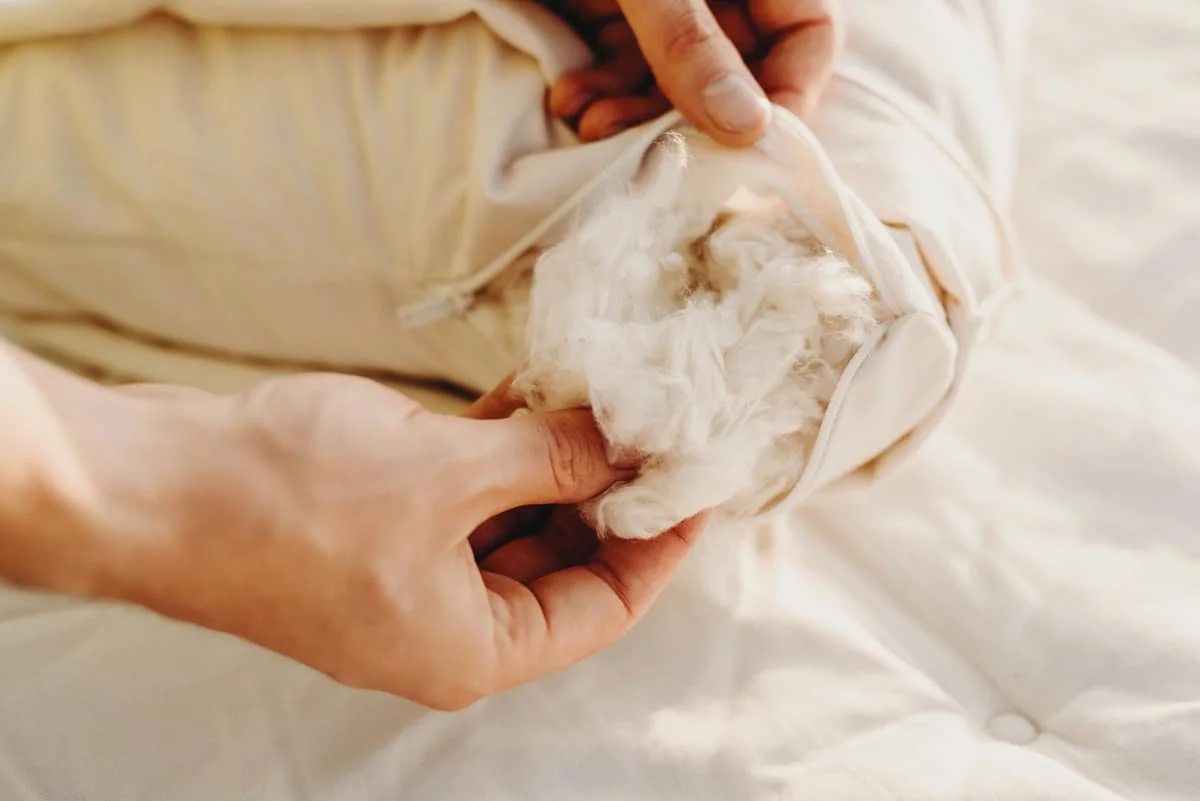
Savvy Rest has been making non-toxic mattresses and bedding for the past twenty years, and they have a few great pillow options. Their kapok pillow is organically grown and encased in a GOTS certified cotton cover. It’s also overflowing with kapok - a naturally moisture-wicking and quick-drying material, to the point of being able to remove the ideal amount for maximum comfort. Our other primary recommendation is their Wool pillow (if able to handle wool’s natural aroma) - organically harvested, and processed using just hot water, covered with the same GOTS cotton. Other options include shredded organic Dunlop latex and C2C Gold Talalay latex. This is one of the few Talalay latex recommendations we will include - as the majority of Talalay latex will include a percentage of synthetic SBR (styrene-butadiene rubber), in addition to requiring a heavier chemical load for processing compared to Dunlop latex. Savvy Rest uses C2C Gold certified 100% natural rubber Talalay latex, and was wonderfully transparent over the phone on their commitment to producing chemical-free home goods, using no synthetic materials or fillers. Some of their products have advanced certifications, while others don’t - which is more to do with the necessity and difficulty of certifying every single touchpoint for GOLS & GOTS than anything else.
CHECKOUT CODE: CLEANLIST
OVERALL SCORE
Best
CERTIFICATIONS
Holy Lamb Organics
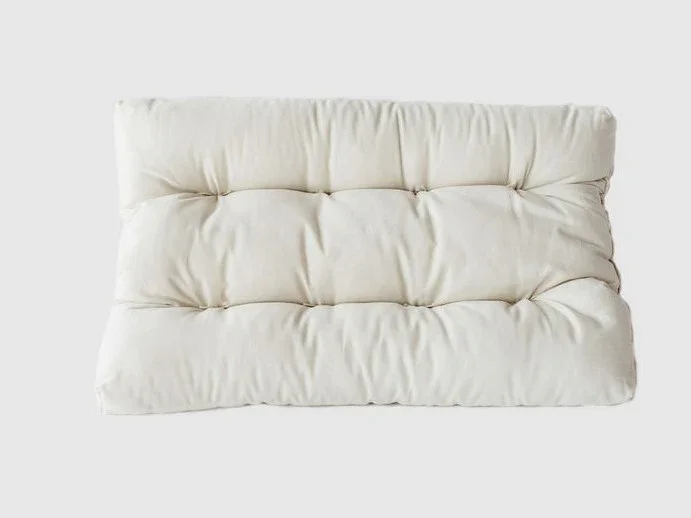
Holy Lamb specializes in wool, and if that works for you, they have some fantastic options. (If you don’t know, they sell a $5 material sensitivity sample kit so you can check). There are three different wool pillow options - the Certified Organic Wool is filled with GOTS certified wool sourced from New Zealand, the Organic Wooly Down is filled with the same NZ GOTS wool, and the All-Natural wool pillows are filled with equally adherent but uncertified wool from small sheep farmers in the Pacific NW. These farmers uphold the processes required for GOTS, and then some, but are small and don’t have the financial reach necessary for certification. All three are encased in GOTS certified cotton. Holy Lamb has been working with the chemically sensitive for many years, and with how confusing "organic" can be as a designation, we greatly appreciate their transparency and commitment to the highest quality sourcing and Non-Toxic processing and finishing.
OVERALL SCORE
Best
CERTIFICATIONS
Coyuchi
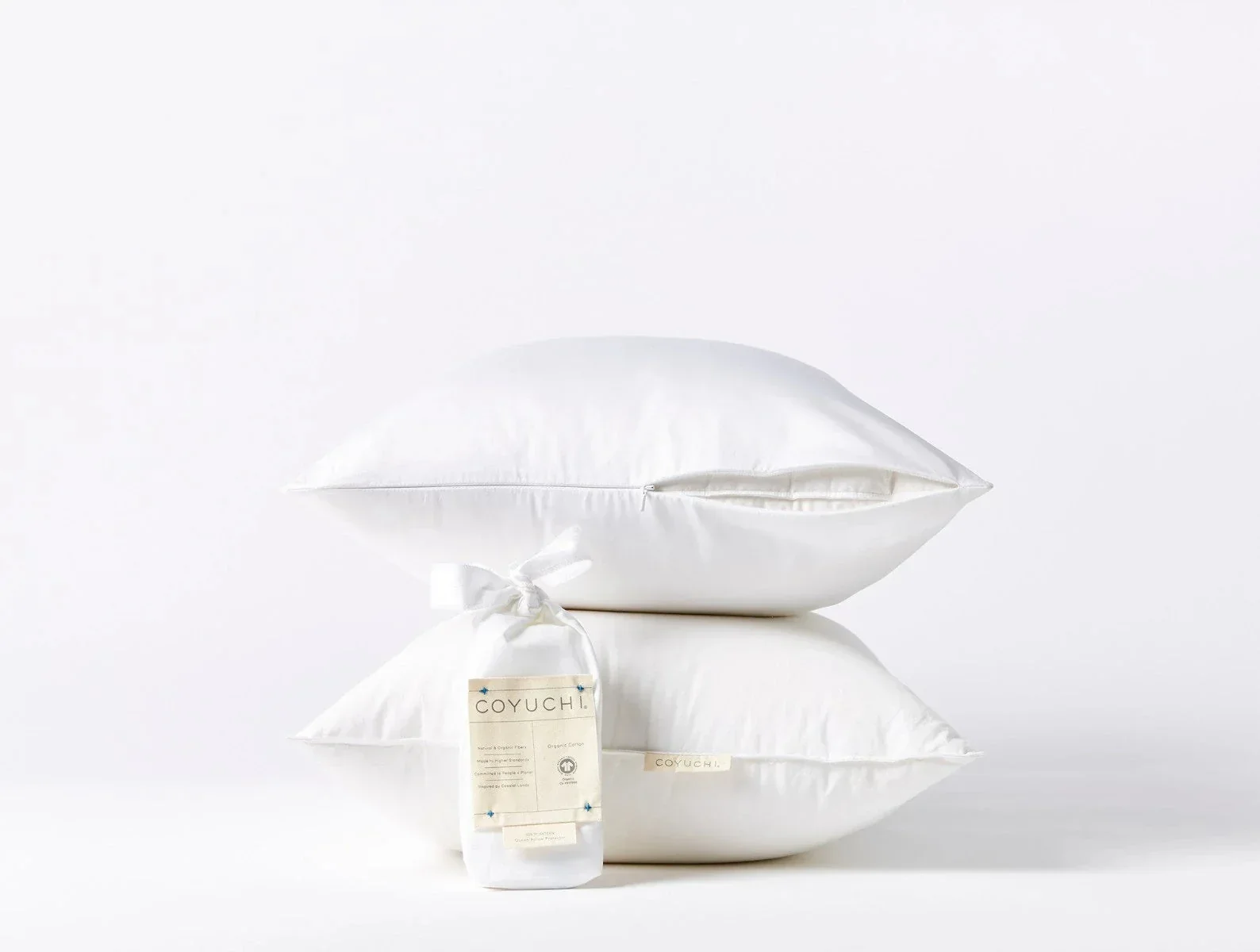
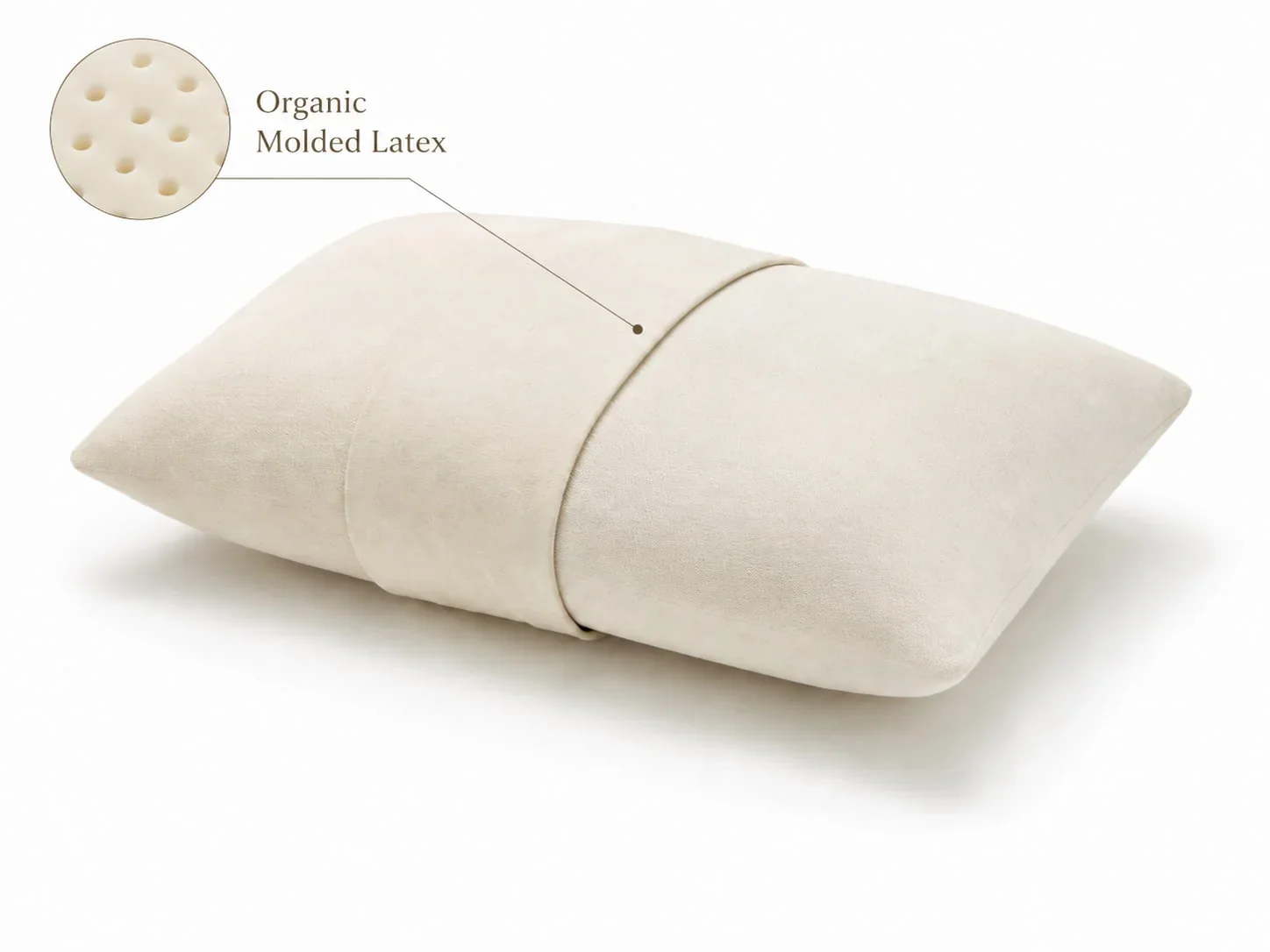
One of the originals in non-toxic home textiles, Coyuchi has a few great latex-based pillow options. All three use GOLS certified Dunlop latex and are encased in GOTS certified cotton. The Turiya Organic Latex Pillow is a molded latex block with an ergonomic head indentation to help with proper spinal alignment. The Organic Molded Latex Pillow is a rectangular block of latex, and the Organic Shredded Latex Pillow lives up to its name as a shredded version - with the molded option offering more support, and the shredded being more malleable and head sinkable. Coyuchi does also have a couple of down pillow options - which we would not recommend, as down can easily trap mold and dust mites.
OVERALL SCORE
Best
CERTIFICATIONS
My Green Mattress
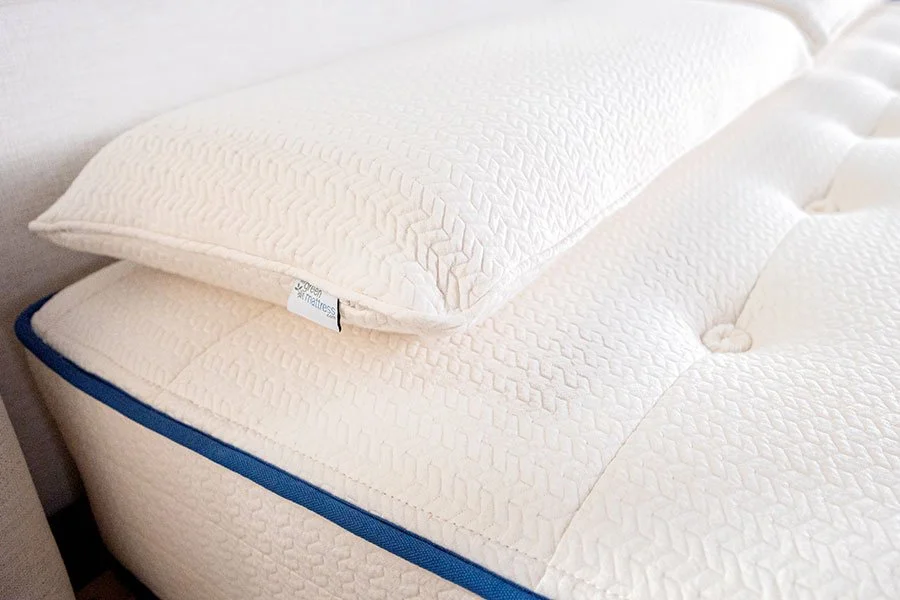
The most affordable option in this list, My Green Mattress has one pillow options, and it’s a great latex one. A core of GOLS Certified Dunlop latex, infused with activated charcoal to help with moisture and odor control, wrapped in a GOTS cotton cover. Recommended for back and side sleepers.
OVERALL SCORE
Best
CERTIFICATIONS
Lifekind
Lifekind has 5 great pillow options - all using natural materials, all chemical free, all GOTS certified (Lifekind and its sister company OMI were the first US-based companies to achieve full GOTS certification for their mattresses). There’s a molded natural rubber pillow, with GOLS certified latex; a spiraled-wool pillow, with GOTS certified wool; a spiraled-cotton, with GOTS cotton; a shredded GOLS latex option, and finally a combo shredded GOLS latex + GOTS wool. All are encased in GOTS certified cotton, and covers are recommended to be spot cleaned only, with barrier pillow covers recommended. On the pricier side, but absolutely no corners are cut when it comes to quality with Lifekind.
CHECKOUT CODE: CLEANLIST
OVERALL SCORE
Best
CERTIFICATIONS
Rawganique
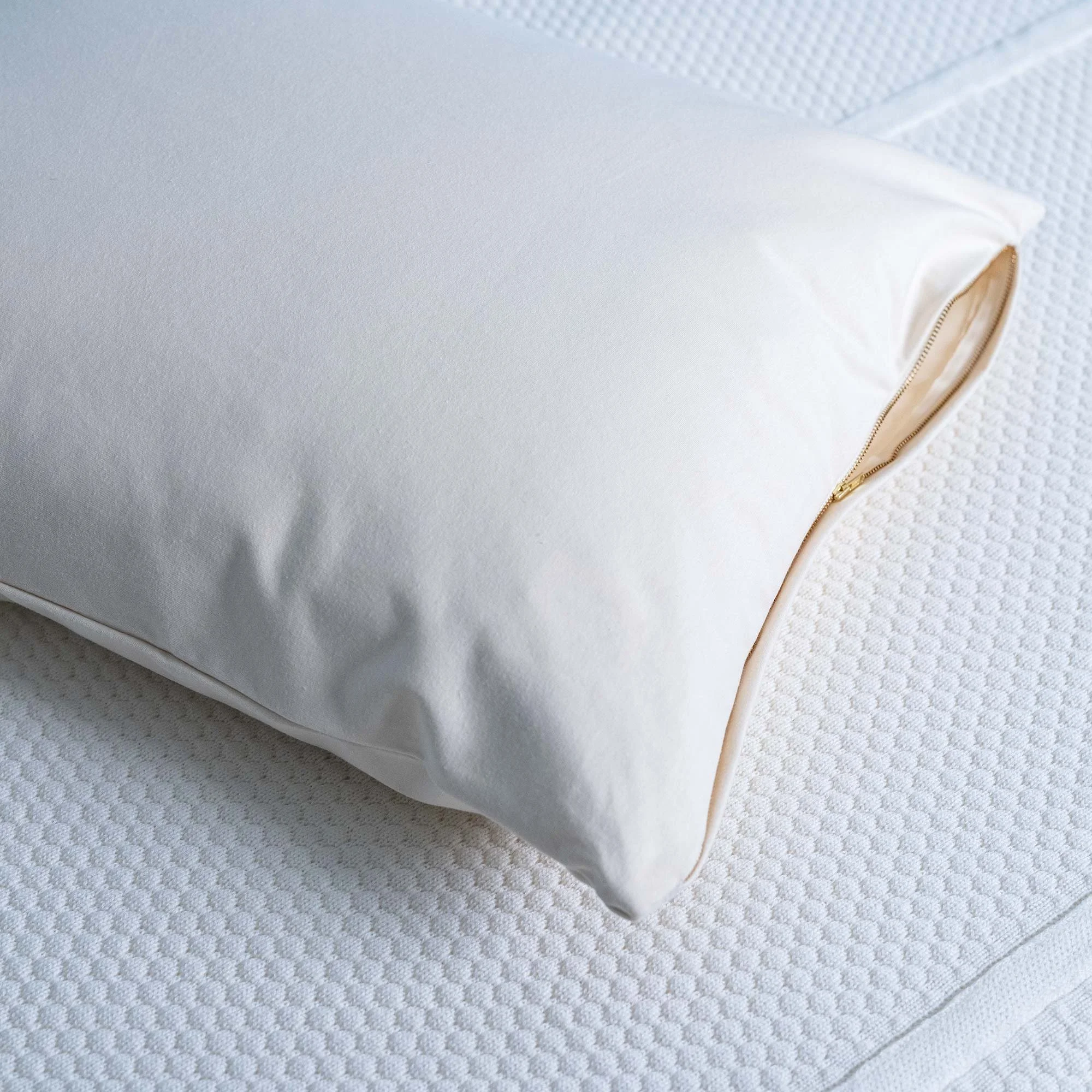
Rawganique takes the same chemically averse and Non-Toxic approach to their pillows as they do with their sheets and window coverings. The Help & Contact page on their website wonderfully details their approach and commitment. While their website can be a bit confusing from a navigation standpoint, the pillow section has a helpful guide for what’s what right at the top - of the 8 different options offered, materials used are Organic cotton and wool, Dunlop latex, wild kapok and organic buckwheat. Some pillows are only available in certain states, and care instructions vary by pillow - most are not washable, and pillow barrier cloth protectors are recommended (though it appears they’ve discontinued theirs). Their highest recommendation for MCS sufferers is their Organic Cotton pillow.
OVERALL SCORE
Best
CERTIFICATIONS
Naturepedic
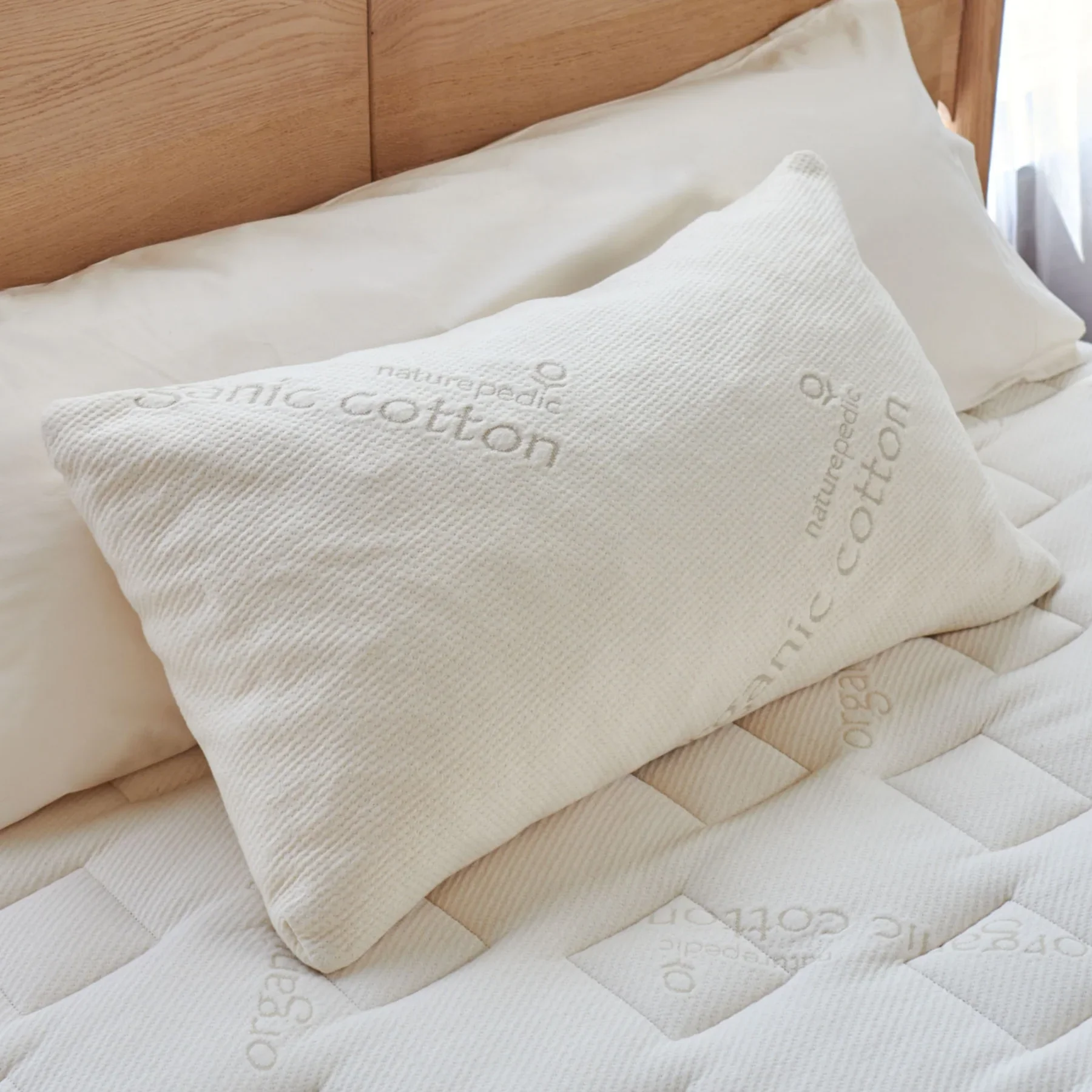
Naturepedic has a number of pillow options, which can be a bit confusing to decode. The most straightforward is the solid latex pillow - a single piece of GOLS certified Dunlop latex encased in GOTS certified Cotton. The adjustable Latex pillow will also be GOLS Dunlop latex in the Medium option (which we would recommend), but will be FSC Talalay in Soft and a mix of the two in the 2-in-1 (which we would not). FSC certification, while admirable from a sustainability standpoint, means nothing in terms of chemical load/non-toxicity. There is a difference in processing between Dunlop and Talalay Latex, with Talalay requiring a higher number of additives and therefore ineligible for Organic based certifications like GOLS (see our materials section). The Organic Wool pillow is another option, but doesn't promote full confidence as wool harvested organically can still be processed with any number of chemicals. Naturepedic states their pillows are also Greenguard Gold certified, which measures Formaldehyde and Total VOC emissions - though natural materials like Dunlop latex shouldn’t emit any toxic VOCs unless there are high amounts of additives used.
OVERALL SCORE
Better
CERTIFICATIONS