Sofas
-
Sofas are amongst the most complex articles in home furnishings, due to the number of ingredients and materials, and the potential for chemical introduction. Sofas are also an area where we see a large amount of cleanwashing. We see many Non-Toxic claims in the sofa world; the four recommendations below are the only ones we currently consider to be actually Non-Toxic. There are three main components to sofa construction that we will break down: Frame, Fill, and Fabric.
Frame: will be constructed with either engineered wood or actual hardwood. Engineered wood for sofas consists of plywood, MDF, OSB and particle board. See our materials section for a comprehensive overview, but in short - engineered wood (aka engineered hardwood) is bonded with resin, which is most often formaldehyde-based. Formaldehyde is a mutagenic, carcinogenic compound which will offgas VOCs for years - and a great ingredient to avoid completely. There is one type of plywood that is technically Non-Toxic - which is veneer-core Purebond plywood. This replaces formaldehyde resin with a soy-based adhesive. The reason we do not recommend this is that the adhesive is bio-based, which can be a nutritive food source for mold and can lead to microbial growth within humid environments. Plywood is also not as sturdy as hardwood, and the structural integrity will not last as long. Hardwood itself can be any number of species. Internal wood is most often unfinished, while visible wood will typically be finished. A nuance when it comes to how wood type is displayed within product details - engineered hardwood can be referred to as simply hardwood, so it is necessary to confirm that what is being used is actual hardwood and not engineered hardwood.
Fill: in conventional sofas, seat cushions are filled with polyurethane foam. All foam, regardless of how it’s presented (high performance, different densities, eco-friendly even) is polyurethane foam. See our materials section for further info - polyurethane foam is a petrochemical product that has a high level of chemicals and additives. Amongst the worst offenders are flame retardants, formaldehyde, VOCs, PFAS, phthalates, heavy metals and other endocrine disrupting, reprotoxic and carcinogenic compounds. The Non-Toxic option for seat cushions is typically natural latex rubber. Conventional back cushions are typically filled with blown polyester fiber (aka hypoallergenic down-alternative), or feather/down. We do not recommend either. Blown polyester can contain many problematic compounds (formaldehyde, VOCs, antimony, heavy metals, etc.) Feather/down, while it can be a good natural option, can also harbor dust mites/allergens and lead to microbial growth, and typically requires polyester ticking to be sewn to the backs of cushion covers to prevent the feathers punching through.
Fabric: the material that wraps the frame and covers the cushions. This will be either natural textiles (cotton/hemp/linen), synthetic textiles (polyester most often), or leather. There are potential problems with each (see materials section on textiles). Synthetic we recommend avoiding outright, as abrasion is common with sofa usage and high microplastic shedding will occur with polyester. The best leather options will be olive tanned/vegetable tanned, avoiding the heavy metal chrome tanning. Natural textiles can still contain high chemical loads if conventionally grown and processed/finished/dyed - the best Non-Toxic choice will be cotton, linen or hemp that has advanced certifications like GOTS for Cotton, and OEKO-Tex for Linen. Performance treatments are often marketed for their convenience, and while we get the appeal, even if these are not PFAS-based, there is a high potential for regrettable substitutes and we recommend avoiding these altogether. Far better to source machine-washable cushion covers for everyday wear and tear.
Additional Exposure Points: glues used in construction can offgas VOCs, as can finishes used on exterior wood. Some sofa constructions feature upholstery cardboard, which we recommend avoiding. Polypropylene is most often the material used for the undercarriage dust cover.
Prioritize Frame - hardwood. Fill - GOLS certified Dunlop latex or C2C Gold Talalay latex for seat cushions, clean textiles (cotton/wool/kapok) for back cushions. Fabric - GOTS certified cotton, OEKO-Tex certified linen, Redlist Free vegetable-tanned leather. Non-Toxic glues and finishes.
Avoid Frame - plywood or other engineered hardwood. Fill - polyurethane foam of any kind (even CertiPUR - see certification section), blown polyester, feather/down. Fabric - all synthetic fabrics (even OEKO-Tex certified ones - we see this often in cleanwashing claims), natural fabrics that are without advanced certifications (even ones labeled organic - if they are only grown organically but then processed and finished conventionally, can carry high chemical loads). Solvent-based and other conventional glues and finishes.
*for an extremely small subset of people, as every human body is different, the proteins in latex and wool can be problematic, and polyurethane foam can actually be the better option. In this case, we recommend ecoINSTITUT certified PU foam as the cleanest we know of, and to a lesser extent, CertiPUR foam (which we don’t love for many reasons, but will admit is better than conventional PU foam). Wool can be swapped out for other natural materials.
Ecobalanza
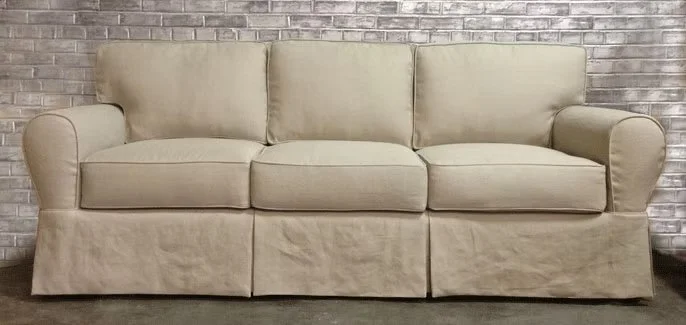
Seattle based custom & bespoke sofa company Ecobalanza takes a fully Non-Toxic approach to their materials and techniques. Their frames are solid beech hardwood wrapped in GOLS certified Dunlop latex, suspension is a combination of steel, flax and jute, cushions are made with any combination of GOTS certified cotton and wool, kapok, and down, and lastly, their fabrics are all GOTS or OEKO-Tex certified, mostly from Two Sisters Eco-Textiles (hands down the best domestic textile company). Ecobalanza sits somewhere on the line between custom and fully bespoke - all of their sofas are custom, though can be based off existing designs within their collection, with direct customer input on materials, seat height/depth and cushion comfort level. They can also go fully bespoke and create something entirely individual and unique or build to match an existing design but with substituting Non-Toxic materials. The through line is their commitment to the highest quality materials, which can be adjusted to take into account specific material sensitivities or preferences, and will last far longer than their conventional counterparts. The price point is reflective of the materials used and the custom nature, but if you have the means, you cannot find a better sofa anywhere. We’re thrilled for everyone that gets to work with the wonderful team at Ecobalanza; please reference The Clean List when asked how you heard about them!
OVERALL SCORE
Best
CERTIFICATIONS
Pure Upholstery
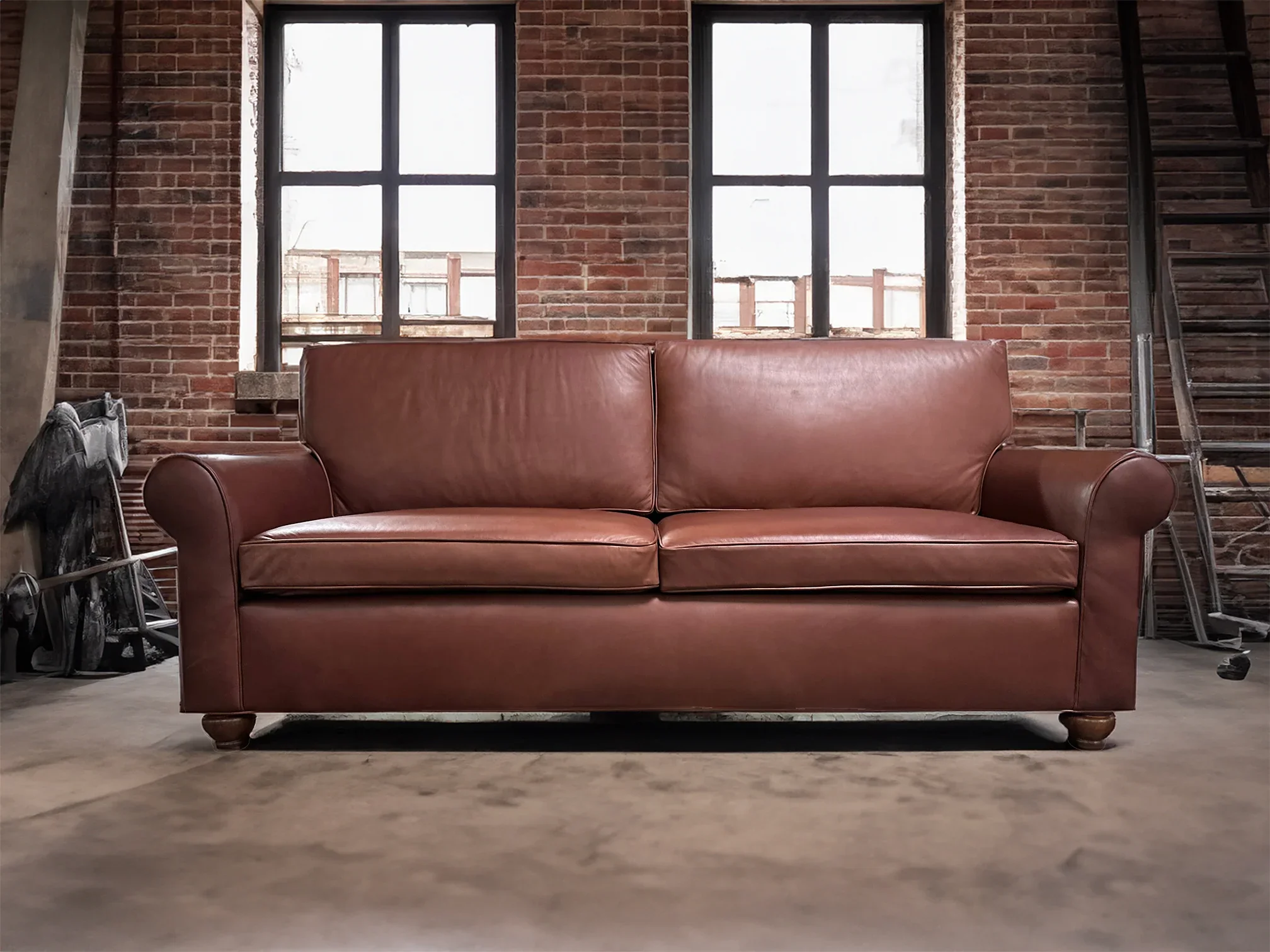
Pure Upholstery was started by the founder and owner after she developed heightened chemical sensitivities from a decades long career in the textile industry. With conventionally processed and dyed textiles playing a major part in her own health issues, the mission of Pure Upholstery has been simple and straightforward since its inception - to make Non-Toxic upholstered furniture without compromise. And they have succeeded! Their sofas are made from hardwood frames - either Maple, Poplar or Alder - and cushions are filled with GOLS certified Dunlop latex and Oregon Tilth certified organic wool. They do use a Greenguard Gold water-based adhesive, Simalfa 335, but are in the process of moving away from this. Suspension is sinuous springs, and the finish on the wood is the Non-Toxic Rubio Monocoat, using Part A only and not the Part B accelerator (in keeping with healthy house principles). Textiles are sourced from the industry leading Two Sisters Eco-Textiles, wool from UK-based Camera Fabrics, and vegetable tanned leather from Ecopell in Germany. Many have GOTS and/or OEKO certifications, and a select number can be pre-shrunk for an additional charge to facilitate machine washing at home. A great company, and great options for Non-Toxic sofas.
OVERALL SCORE
Better
CERTIFICATIONS
Savvy Rest
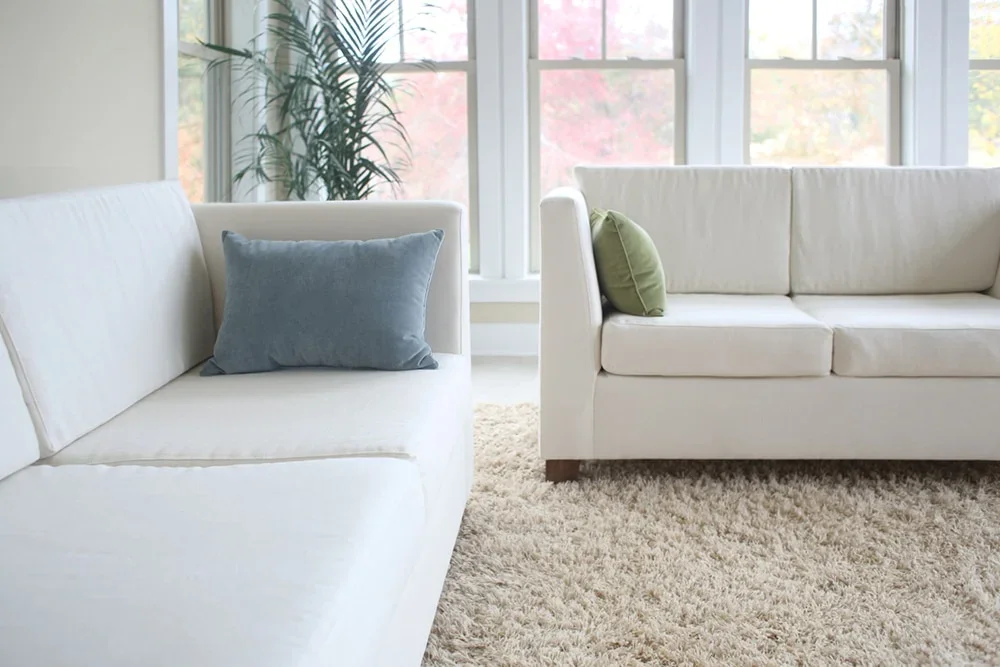
Savvy Rest is mostly a mattress and bedding company, but they do make one sofa - the Verona - for which they apply their same Non-Toxic principles and materials. Made with Maple Hardwood frames, C2C Gold Talalay latex (the only Talalay we recommend), organic wool (the same wool they use in their pillow - not GOTS but processed with only hot water) and coconut coir for batting, and jute suspension. Their finishes range from unfinished to linseed oil to Rubio Monocoat for the colored finished. See our notes on linseed oil based finished in our materials section - which is also the base for Rubio Monocoat, and Savvy Rest only uses Part A and not Part B (the accelerant). The configuration is one size only, and the textile options are GOTS certified hemp, cotton, or a blend, which can include a slipcover - but while the fabric is washable, it is not recommended to do so, as they are not pre-shrunk and there is a high chance of shrinkage.
CHECKOUT CODE: CLEANLIST
OVERALL SCORE
Better
CERTIFICATIONS
Cisco Home
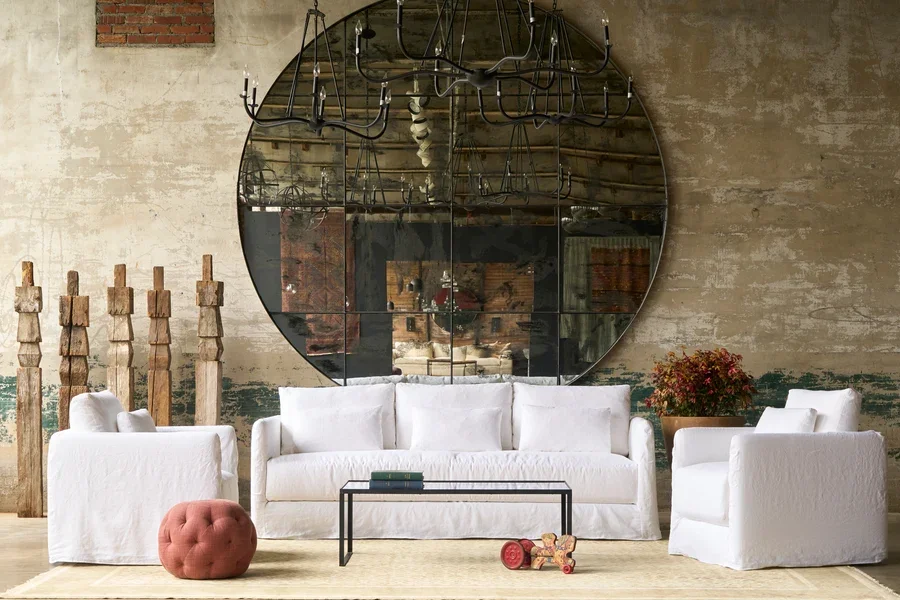
Cisco Home is a "to the trade" upholstery company - meaning they sell directly to interior designers and retailers rather than consumers - who helped pave the way with Non-Toxic upholstery twenty years ago when they introduced their Inside Green line. As it stands now, the majority of their sofas and sectionals can be made "Inside Green", which substitutes out conventional materials for Non-Toxic ones. Frames are FSC hardwood, either poplar or maple, and seat cushions are filled with GOLS certified Dunlop latex, GOTS cotton, organic wool. Back cushions are generally a feather/down combination, though we would recommend against this as down can harbor dust mites and lead to microbial growth; luckily Cisco can swap out this fill for wool (which is naturally moisture wicking and antimicrobial). Wood stains are Low-VOC - not Zero-VOC - but can be left off at the customer's request. Non-Toxic textile options are limited, and can be found by filtering for organic textiles - though they do a fair amount of work with COM, which opens up the possibilities significantly (for instance, the entire Two Sisters Eco-Textiles catalogue). Cisco can make slipcovers for their sofas, though care & maintenance recommendations for their textiles are professional laundering only. As this is a trade only company, ordering is best directly through Kaleigh/Uniquely You Decor.
OVERALL SCORE
Good
CERTIFICATIONS